
REFINED SATAO TENTS
Create a rejuvenating glamping getaway with the Satao tent
Create a private retreat where natural beauty and thoughtful comfort come together. The Satao tent is designed for relaxed mornings, quiet evenings, and uninterrupted views of the outdoors. With soft interiors and a sense of seclusion, it is ideal for guests who value space, serenity, and an authentic safari atmosphere.
Our tents are designed to thrive in any environment
Mountains
Tropics & Beaches
Rainy Locations
Cold Climates
Windy Areas
Design your refined Satao tent to fit your space perfectly
Every refined Satao tent is customizable to suit your setup, with various lengths and a 5m (16′ 4″) wide footprint. Choose from mild steel, 304 stainless steel, or 316 marine grade stainless steel. Timber horizontal beams and legs aren’t required, but we recommend them in windy conditions.
5 Leg Option
8.4m (l) x 5.42m (w) frame footprint27’6” (l) x 17’9” (w) frame footprint
-
Available Canvas Body Sizes:
-
4.5m (14’9”) x 5.0m (16’4”) with a 3.0m (9’10”) covered terrace.
Total enclosed area 22.5 m2 (242 ft2) -
5.4m (17’8”) x 5.0m (16’4”) with a 2.1m (6’10”) covered terrace.
Total enclosed area 27 m2 (290 ft2) -
6.3m (20’8”) x 5.0m (14’9”) with a 1.2m (3’11”) covered terrace.
Total enclosed area 31.5 m2 (339ft2)
6 Leg Option
10.5m (l) x 5.42m (w) frame footprint34’5” (l) x 17’9” (w) frame footprint
-
Available Canvas Body Sizes:
-
5.4m (17’8”) x 5.0m (16’4”) with a 4.2m (13’9”) covered terrace.
Total enclosed area 27 m2 (290 ft2) -
6.3m (20’8”) x 5.0m (16’4”) with a 3.3m (10’9”) covered terrace.
Total enclosed area 31.5 m2 (339 ft2) -
7.2m (23’7”) x 5.0m (16’4”) with a 2.4m (7’10”) covered terrace.
Total enclosed area 36 m2 (387 ft2)
7 Leg Option
12.6m (l) x 5.42m (w) frame footprint41’4” (l) x 17’9” (w) frame footprint
-
Available Canvas Body Sizes:
-
7.2m (23’7”) x 5.0m (16’4”) with a 4.5m (14’9”) covered terrace.
Total enclosed area 36 m2 (387 ft2) -
8.1m (26’6”) x 5.0m (16’4”) with a 3.6m (11’9”) covered terrace.
Total enclosed area 40.5 m2 (435 ft2) -
9.0m (29’6”) x 5.0m (16’4”) with a 2.7m (8’10”) covered terrace.
Total enclosed area 45 m2 (484 ft2) -
9.9m (32’5”) x 5.0m (16’4”) with a 1.8m (5’10”) covered terrace.
Total enclosed area 49.5 m2 (532 ft2)
8 Leg Option
14.7m (l) x 5.42m (w) frame footprint 48’2” (l) x 17’9” (w) frame footprint-
Available Canvas Body Sizes:
-
9.0m (29’6”) x 5.0m (16’4”) with a 4.8m (15’8”) covered terrace.
Total enclosed area 45 m2 (484 ft2) -
9.9m (32’5”) x 5.0m (16’4”) with a 3.9m (12’9”) covered terrace.
Total enclosed area 49.5 m2 (532 ft2) -
10.8m (35’5”) x 5.0m (16’4”) with a 3m (9’10”) covered terrace.
Total enclosed area 54 m2 (581 ft2) -
11.7m (38’4”) x 5.0m (16’4”) with a 2.1m (6’10”) covered terrace. Total enclosed area 58.5 m2 (629 ft2)
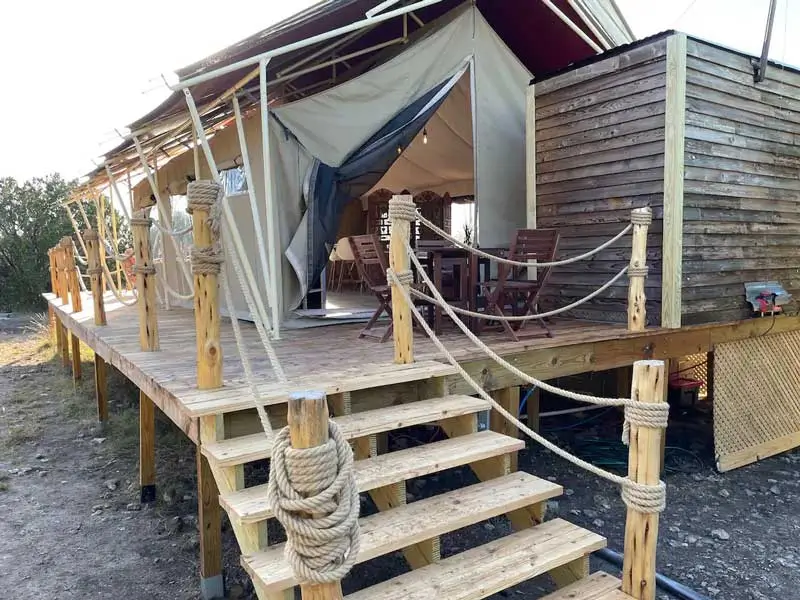
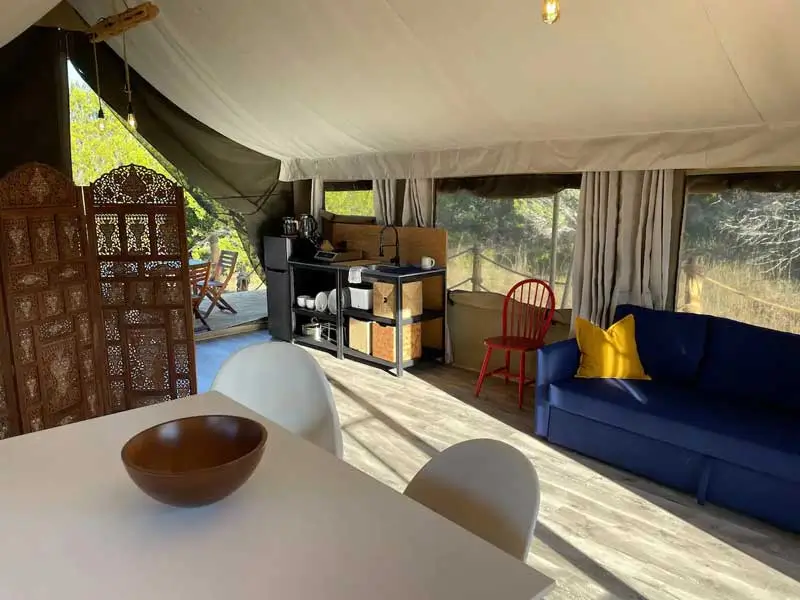
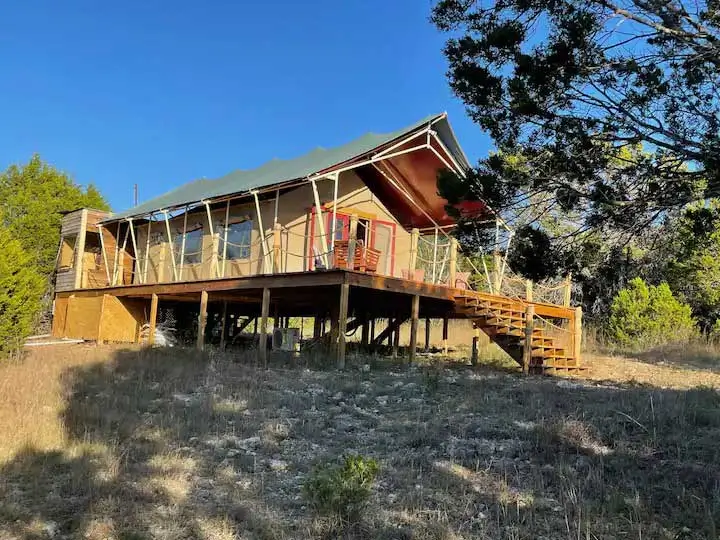

Thoughtfully crafted for everyday luxury
Luxury Glamping
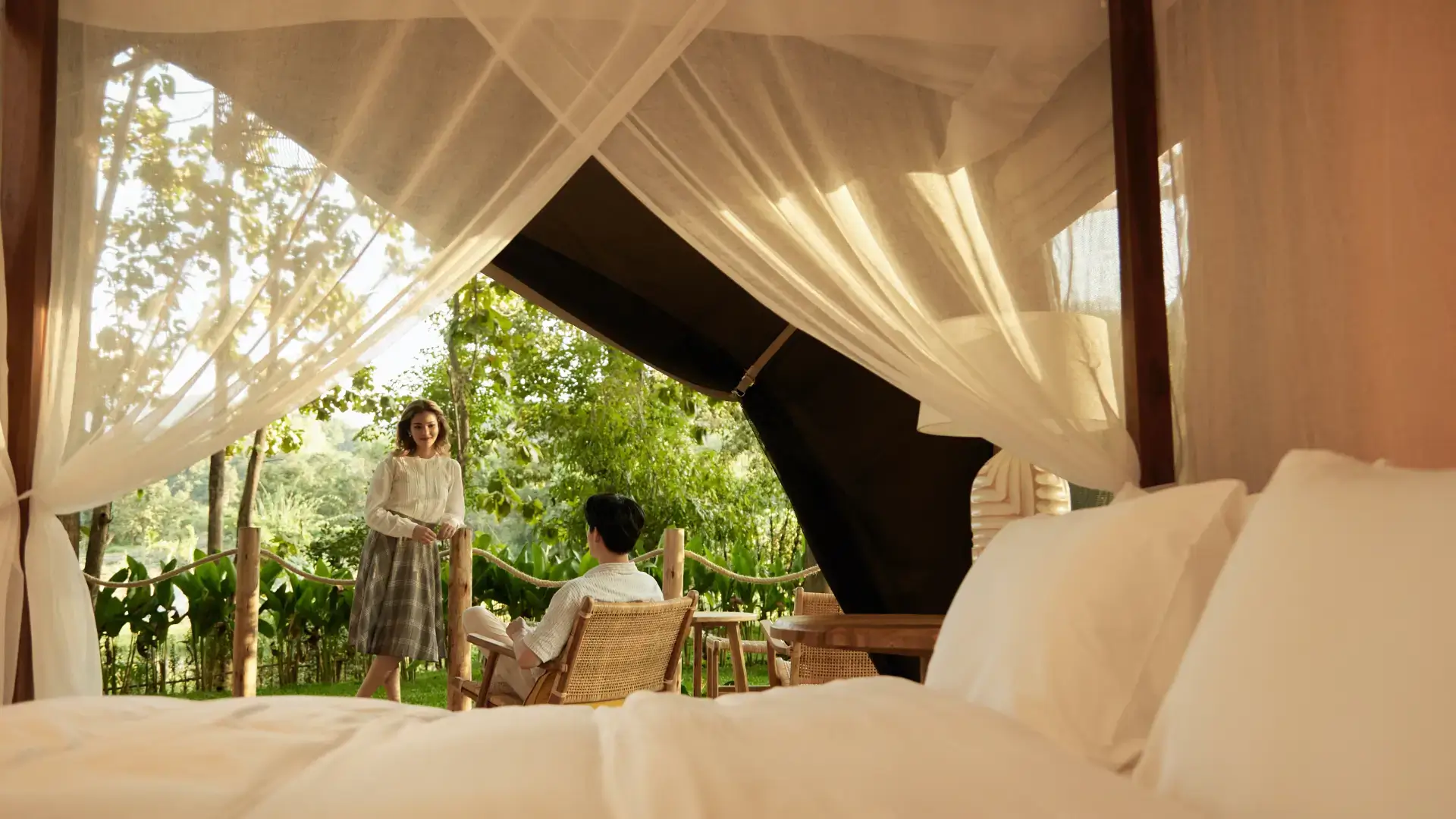
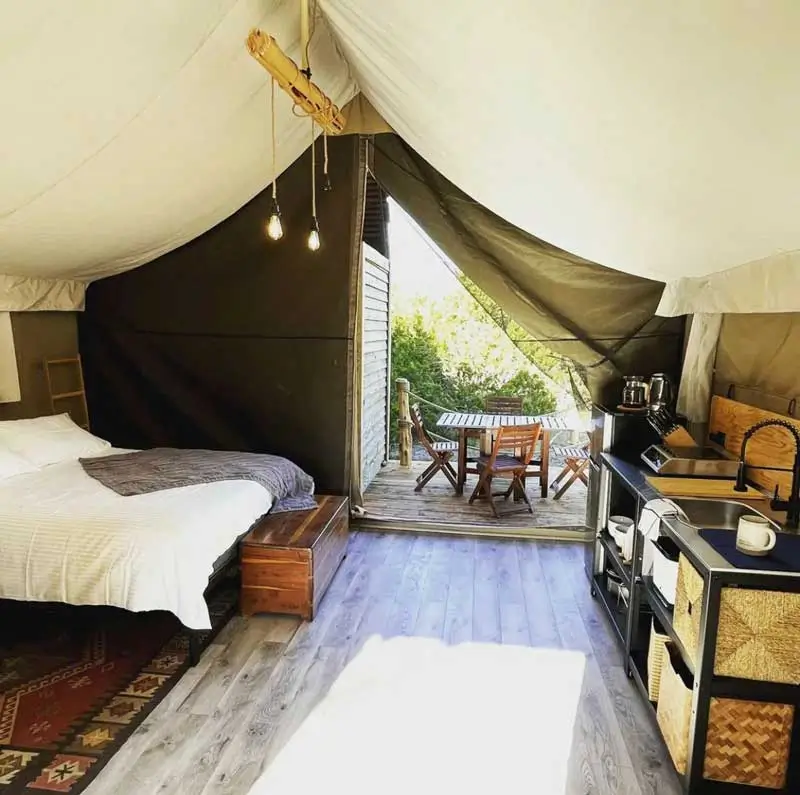
Settle into comfort in our Satao Tent. Enjoy a cozy bedroom, a welcoming sitting area, and a spacious veranda made for unwinding.
Private Dining
Host a meal that feels special and effortless. With an elegant table setup and a scenic veranda, every gathering is easy to enjoy.
Small Events
Bring people together in a relaxed, intimate setting. There’s space for chairs and tables, plus a charming veranda that completes the layout.
Customizable Options
Shape the tent to suit your needs. Choose upgrades and enhancements that match your preferences while keeping the look calm and refined.
Get in touch to learn more about our Satao tent
You may already be picturing how a Satao tent could elevate your space, but you’re not sure how it would work on your property. A free consultation helps turn that idea into a clear plan. Whether you’re creating a refined outdoor retreat, a standout venue for guests, or a flexible structure for your land, you’ll leave with practical guidance and next steps you can actually use.
During your consultation, you’ll explore:
- The right Satao tent size and configuration for your site and intended use
- Layout options that maximise space, comfort, and visual impact
- Design ideas that help the tent sit naturally within its surroundings
- Ways to create a functional, comfortable setup across different seasons
- Practical tips to ensure your Satao Tent feels considered and purpose built
Fill out the form below to book your free consultation and start planning your Satao tent with confidence.
Questions we often get asked about the Satao tent
Can someone come to my site before I build, and help with setup too?
Yes, both are possible. And honestly, they can make a big difference when you’re setting up a Satao tent. A site visit before you build helps you plan smarter. Someone can walk the land with you, check out the terrain, look at layout options, sun angles, wind direction, and how trucks or gear will access the space.
This is especially helpful if you’re building on uneven ground, near protected areas, or just want to avoid surprises later on. A lot of people choose this step just for peace of mind before placing their order.
When it comes time to install, you don’t have to figure it out all on your own. There’s a supervised setup option available. That means someone with experience can come out to guide your team through the process, usually by helping install one Satao tent model properly, so your crew can handle the rest with confidence.
You’ll need to have your own tools ready on-site, like drills, ladders, and scaffolding. You’re also responsible for covering travel, meals, local transport, and lodging for the supervisor. Supervised setup days usually run 8 to 10 hours, depending on the number of tents and the complexity of the design.
What makes a Satao tent feel more solid and long-lasting than a regular tent?
A Satao tent is built to feel more like a real structure than a camping setup, and that comes down to the materials and how they work together.
It starts with the frame. A thicker 50 mm steel roof frame gives the tent more strength and stability compared to standard 38 mm frames. If the tent will stay up long-term or be placed in a tough environment, that extra support matters. Stainless steel can also be used in coastal or humid areas to help prevent corrosion over time.
The canvas is another big reason. Treated polyester ripstop canvas is used instead of cotton. It is stronger, holds its shape better, and does not keep tearing if a small rip happens. It also resists UV damage and mold.
Insulation can be stitched between two canvas layers, helping with temperature control and noise reduction. All of this together makes the Satao tent feel sturdy, comfortable, and built to last.
Can I customize the size, layout, and look of a Satao tent?
Yes, customization is one of the biggest advantages of a Satao tent. You are not locked into fixed sizes or layouts. The design can be shaped around how you want to use the space and where it will be placed.
Tent sizes can range from about 130 square feet for small private spaces to over 10,000 square feet for lodges, dining areas, or multi-room setups. The size depends on your needs, not a preset model.
You can bring your own ideas, sketches, or floor plans. That might include extra windows, a custom roof shape, an open-air bathroom, or a wraparound deck.
Even when starting from an existing design, you can still adjust canvas color, frame finish, door styles, window placement, and added features like verandas or overhangs. The goal is to make the Satao tent fit your vision, not the other way around.
Do Satao tents need a deck or platform, and what should I know about the foundation?
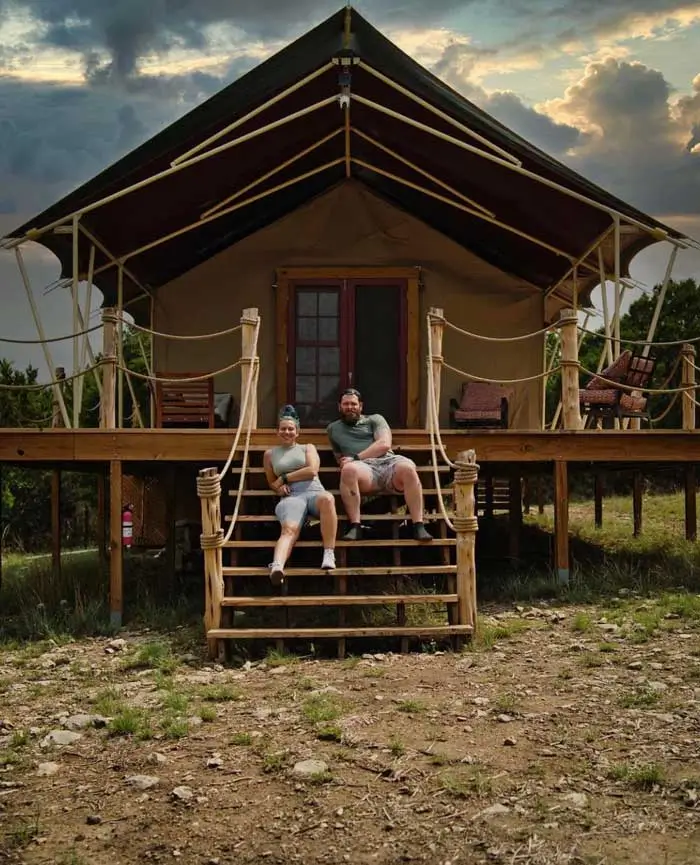
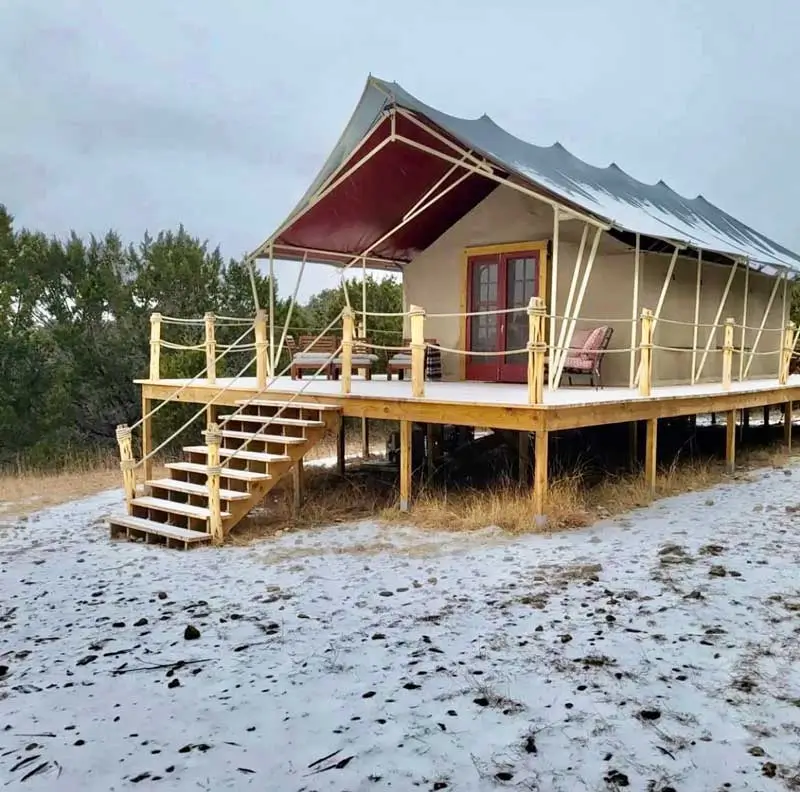
Yes, a strong and level platform is one of the most important parts of installing a Satao tent. These tents are designed to sit on a stable base like a raised wooden deck or a concrete slab. A proper foundation keeps the structure secure and protects the canvas from moisture and wear.
Placing the tent directly on the ground often causes problems like water buildup, fabric damage, pests, and unstable anchoring. A raised deck improves airflow and keeps the interior dry and clean.
Most platforms extend about 3 feet beyond the tent on all sides. This extra space helps with setup, maintenance, and outdoor features like walkways or verandas.
Decking is not usually included with the tent, but help with planning and design is available. A good foundation might not be exciting, but it plays a huge role in comfort and long-term performance.
How does a Satao tent handle extreme weather like heat, wind, rain, or snow?
A Satao tent is designed for real-world weather, not just mild conditions. The materials and structure can be adapted based on where the tent will be installed.
In hot climates, layered roof systems allow air to flow between the shade fly, rain fly, and canvas, reducing heat buildup. Ceiling fans, mini-split systems, or underfloor cooling can also be added.
For wind, frame strength can be adjusted. Standard setups handle moderate wind, while reinforced frames with ring beams can withstand very strong wind conditions.
Rain protection comes from a waterproof PVC rain fly and proper roof pitch. With correct installation and drainage, heavy rain is not an issue.
In snowy regions, steeper roof angles and reinforced frames are used to handle snow load. UV-resistant materials also protect the tent from sun damage in high-exposure areas.
How secure is a Satao tent against theft or unwanted access?
Security matters, especially in remote areas. A Satao tent can include lockable doors, which already adds a strong level of protection compared to standard tents.
For added peace of mind, many people use motion lights, small cameras, or basic alarm systems around the tent. These simple measures can discourage unwanted access without making the space feel closed off.
Placement also plays a role. Well-lit and visible locations tend to feel safer and attract less attention from unwanted visitors.
While no structure is completely theft-proof, a Satao tent can be designed to balance comfort, openness, and practical security.
What is the ordering process like for a Satao tent?
Ordering a Satao tent is a step-by-step process, not a quick checkout. Once the design and features are finalized, an initial invoice and freight estimate are provided.
After that, detailed drawings are shared for review and approval. Once approved, the design is converted into CAD files and production begins after a 75 percent down payment is received.
Manufacturing usually takes 8 to 10 weeks. About two weeks before completion, the final freight cost and remaining 25 percent balance are invoiced. After payment, an estimated shipping date is confirmed.
All payments are made by direct wire transfer. Credit cards and PayPal are not accepted, so planning ahead helps keep things moving smoothly.
Where is the Satao tent made, and how does shipping work?
The Satao tent is manufactured in South Africa. Ocean freight typically ships from Durban, while air freight goes through Johannesburg.
Once the tent arrives at the nearest port or airport to you, customs clearance is handled by you or your clearing agent. For shipments to the US, a commonly used customs clearing company can help with the process, billing independently.
Shipping costs depend on location, number of tents, and size. Freight quotes are usually valid for 30 days. Duties, taxes, and local import fees are not included and vary by country.
You receive guidance throughout the shipping process until the tent reaches your destination country.
How long does it take to build and deliver a Satao tent, and how much does it cost?
A Satao tent is made to order. Manufacturing usually takes 8 to 10 weeks after design approval. Larger or more complex builds may take longer.
Ocean freight typically takes 30 to 45 days, while air freight takes around 5 to 7 days. From order confirmation to delivery, most projects take about 3 to 4 months.
Pricing depends on size, materials, layout, insulation, add-ons, and foundation plans. Shipping is quoted separately based on destination and shipment size.
There is no fixed price, but once project details are shared, a clear and tailored quote is provided.
What should I know before getting started with a Satao tent?
Before starting a Satao tent project, it helps to be clear on how the tent will be used. Guest stays, private retreats, or shared spaces all affect design choices.
Details like climate, terrain, and location matter. Stainless steel frames work better in humid or coastal areas. Photos, maps, or sketches of the land are very helpful, even if plans are still rough.
Heating and cooling systems can be added based on climate needs. Raised decks also help with airflow, moisture control, and comfort during wet or cold months.
With proper care and site planning, these tents are often used as semi-permanent structures rather than seasonal setups.
Permits depend on local rules. In many areas, these tents count as temporary structures, but it is always best to check locally. Structural drawings can usually be provided if needed.
Starting early and gathering basic information makes the process smoother and more realistic from day one.