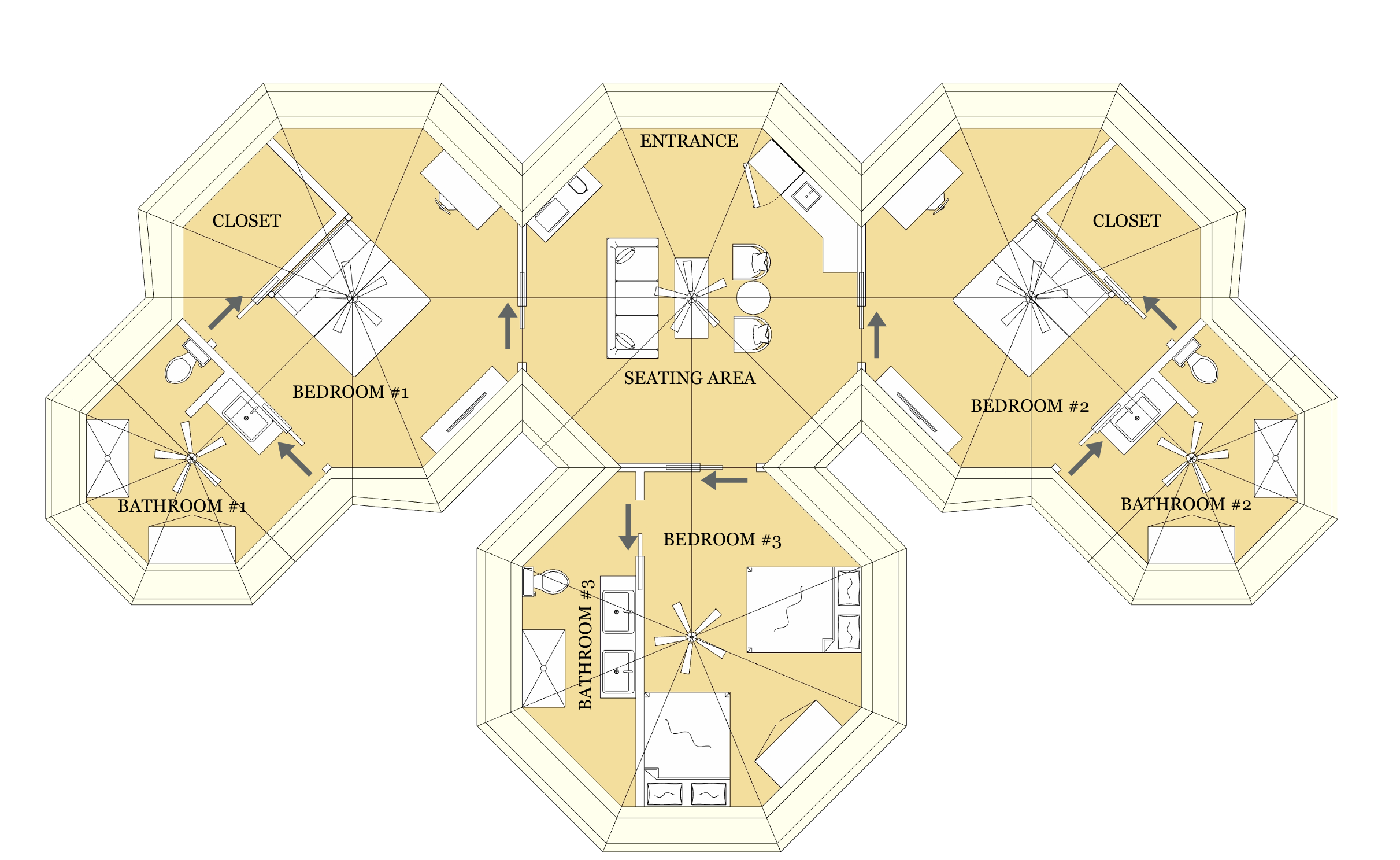
A group stay should still feel calm and personal. The Mahlati tent creates a quiet space where friends or family can slow down, share meals, and enjoy nature without giving up comfort. Large living areas and thoughtful design makes your retreat in the wild more comfortable for your guests.

You want your Mahlati tent to feel like it truly belongs on the property, and not just dropped on the lawn. This quick space check helps you tighten the plan before you buy or build anything around it. Once you submit the form, we’ll organize a consult and work through how you want the space to work day to day, sleeping, relaxing, hosting, or guest stays.
The consultation is free. You just need to fill the form below.
Yes, it can help a lot when you’re planning luxury glamping tents. A site visit before you build lets you plan smarter and avoid surprises. Someone can walk the land with you, check the terrain, and talk through layout options. They can look at sun angles, wind direction, and how trucks or gear will access the spot.
This is extra helpful if the land is uneven, if access is tight, or if the tent will sit near protected areas. It can save you from placing a tent where drainage is poor or where wind hits hardest.
A lot of people do a visit just to feel calm about the plan before ordering. It’s a simple step that can prevent expensive changes later. It also helps you think through where utilities might run, where guests will walk, and how the space will feel once it’s built.
No, you don’t have to figure it out alone. There’s a supervised setup option for luxury glamping tents. That means someone with experience can come out and guide your team through the process, often by helping install one tent model the right way so your crew can repeat it.
A few things matter here. You’ll need your own tools on-site, like drills, ladders, and scaffolding. A list is usually shared ahead of time so you can prep.
You also cover travel, meals, local transport, and lodging for the supervisor. That’s an extra cost, but it can be worth it if your land is tricky or your team is new to this. Supervised days often run 8 to 10 hours, depending on the build.
Luxury glamping tents are built to feel more like a permanent space, and a big reason is how the materials work together.
Start with the frame. A thicker 50 mm steel roof frame gives more strength and stability than standard 38 mm frames found in many tents. If the tent will stay up long-term, that extra support matters. For humid or coastal areas, a stainless steel upgrade can help reduce corrosion over time.
The canvas also makes a difference. Treated polyester ripstop canvas is used instead of cotton. It’s stronger, holds its shape better, and doesn’t keep tearing if a small rip starts. It also resists UV, mold, and general wear.
For comfort, insulation can be stitched between two layers of canvas to help with temperature and reduce outside noise.
Two parts do most of the heavy lifting: the frame and the canvas. A thicker 50 mm steel roof frame helps the structure feel stable and solid. If the tent will be in a humid or coastal place, stainless steel can be used to handle moisture better and reduce rust issues.
The fabric matters just as much. Treated polyester ripstop canvas is designed to be strong and durable. It doesn’t stretch like cotton and it helps stop small damage from turning into big tears. It also stands up well to UV exposure and helps fight mold and general wear.
If comfort is a priority, insulation can be added between two canvas layers. That can help the inside feel more quiet and steady in temperature. Together, these choices are a big part of why luxury glamping tents feel built for long-term use.
Size is very flexible with luxury glamping tents. You’re not stuck with one small set of fixed options. A tent can be designed as small as around 130 square feet for a private nook or spa room. It can also be built up to 10,000+ square feet for bigger plans like a lodge, restaurant, or multi-room suite.
There’s no hard limit. The best size depends on what you want the space to do and what your site can support.
If you have a clear idea, you can bring sketches or a floor plan and build around that. Even if you start with an existing design, you can still adjust details so the final space fits your needs instead of feeling generic.
Yes. One of the biggest benefits of luxury glamping tents is customization. You can adjust the layout to match how you want the space to work, and how your land is shaped.
You can bring your own ideas, sketches, or floor plans. That could include features like extra windows for natural light, an open-air shower, a wraparound deck, or changes to the roof shape to match your location.
Even if you start from an existing design, you can still personalize the details. That includes the color of the canvas, the frame finish, window placement, door styles, and add-ons like overhangs or a front veranda.
The goal is to end up with a luxury glamping tent that fits your plan, your setting, and the way you want people to use the space.
Yes, a strong, level platform is one of the most important parts of setting up luxury glamping tents. These tents are meant to sit on a stable base like a raised wooden deck or a concrete slab. A good foundation helps keep the structure secure and protects the canvas. It can also create space underneath for plumbing, electrical, and insulation if you plan to add those.
Putting the tent directly on the ground often leads to problems like moisture buildup, faster fabric wear, drainage trouble, and weaker anchoring. A raised deck helps airflow, pest control, and keeps the interior cleaner and drier.
Many people choose wood, but floating decks and concrete can work too, depending on the site. Getting the base right makes everything else easier.
A platform shouldn’t stop right at the tent edge. As a general rule for luxury glamping tents, the platform should extend at least 1 meter, about 3 feet, beyond the tent on all sides. That extra space makes setup easier and gives you room for maintenance and walkways. It can also leave space for outdoor features like a veranda or an outdoor shower.
The type of platform can vary. Many people use a raised wooden deck, but concrete slabs and floating decks can work too. The main goal is level and stable.
If the site is sloped, near water, or hard to access, planning the platform matters even more. While decking isn’t usually supplied with the tent, help with deck design and planning can be available, plus ways to connect with local suppliers for materials.
Luxury glamping tents can be designed for real heat. Comfort starts with airflow. The roof system can use layers like a shade fly, PVC rain fly, and canvas. Air can move between layers, which helps reduce heat buildup like natural insulation.
Many people add ceiling fans or small A/C options like a mini-split. Some also use an Evening Breeze system that cools the air over the bed area. In some cases, underfloor cooling systems are used to keep the space comfortable without large HVAC equipment.
Sun exposure also matters. The outer shade fly blocks harsh sunlight and helps protect the canvas below from UV wear. This can help reduce fading, cracking, and long-term damage, especially in deserts, mountains, and high-sun regions.
Wind performance depends on the frame and how the tent is anchored. Basic setups for luxury glamping tents can handle moderate winds around 75 to 85 km/h, which is about 46 to 53 mph. If your site is more exposed, stronger framing options can be used.
With upgrades like a 60 mm steel frame and a ring beam, the structure can be built to handle winds over 180 km/h, which is 112+ mph. For high-risk zones, the frame, anchoring, and extra support are adapted to match local conditions.
Wind planning isn’t just about the tent. Placement matters too. A site visit can help you avoid wind tunnels and pick a spot with better natural protection, which helps the whole setup last longer and feel more stable.